
Migration and the Unfinished Search for Home
The Satanic VersesThis thread traces how migration remakes identity, making home a contested inheritance rather than a place one can simply recover.
increasing Bearing strength in each event
 decreasing
Bearing strength in each eventdecreasingThe Distant City
The Distant City
A borrowed destination
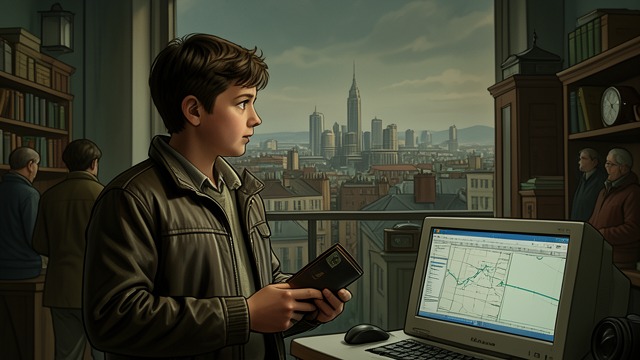
As a boy in Scandal Point, Saladin Chamcha turns London into a promise of order and self-creation. A found wallet of English pounds makes the imagined city tangible, while his father’s seizure of it teaches him to associate departure with escape from paternal power.
The cost of departure
A childhood assault deepens his wish to leave Bombay, and an English education seems to offer a way to remake himself. His dream of arrival begins not as curiosity about another country but as a plan to disown the place and history he already has.
This early longing establishes the contradiction that follows him: he seeks freedom through migration, yet measures success by how completely he can become someone else.
An English Performance

An English Performance
Learning the part
In England, Saladin studies its habits and conceals the parts of himself that might mark him as foreign. His accent, clothes, and manners become deliberate instruments in a long performance of belonging.
The mask takes hold
He builds a professional life through voices and impersonations, while the success of the performance obscures the question of what remains beneath it. The more convincingly he imitates what he admires, the harder it becomes to tell whether adaptation has become self-erasure.
His chosen Englishness is neither simply imposed nor entirely authentic: it is an ambitious construction, sustained by longing and by the desire to be accepted.
The Return That Does Not Restore
The Return That Does Not Restore
A familiar place made strange
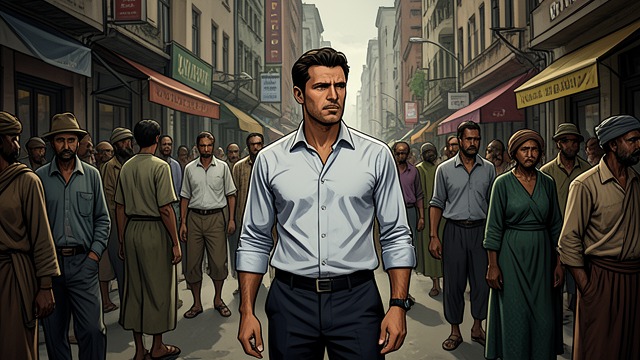
Back in Bombay, Saladin finds that his old city is not the one he remembers. Zeenat Vakil challenges the sheltered childhood landscape he once called home, drawing attention to the poverty and social pressures beyond Scandal Point.
The limits of nostalgia
His English identity fails to translate smoothly into the place of his birth: his voice slips, his knowledge feels inadequate, and he is unsettled by customs he once took for granted. He cannot simply resume an earlier self because both the city and its former resident have changed.
The return reveals that belonging is not recovered by revisiting childhood geography. It requires an active relation to a present that memory alone cannot supply.
Home as an Unwelcome Inheritance
Home as an Unwelcome Inheritance
Returned to a community
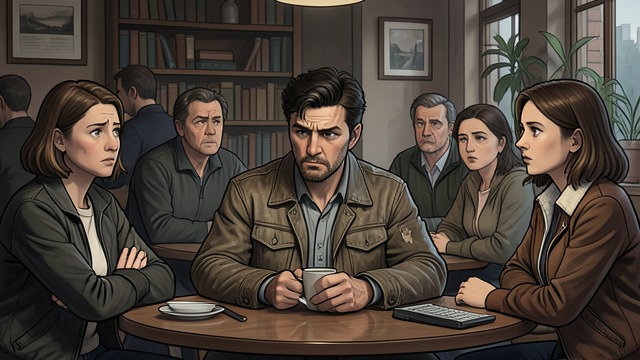
After his arrest and bodily transformation, Saladin is sheltered at the Shaandaar Café, among people he had spent much of his life trying to distinguish himself from. Their hospitality offers refuge, but it also confronts him with the distance between his self-image and the ties he cannot simply discard.
A changed definition of belonging
The people around him treat his altered body as both a source of fear and a sign that he shares their exposure to racialized power. Saladin resists being claimed as one of them, yet the violence that marked him as an outsider also pushes him toward a community he had rejected.
His eventual return to human form does not restore the old hierarchy between a supposedly secure English self and an alien origin. The experience leaves belonging more complicated, and more real, than the identity he had performed.
Choosing the Present
Choosing the Present
An inheritance beyond property
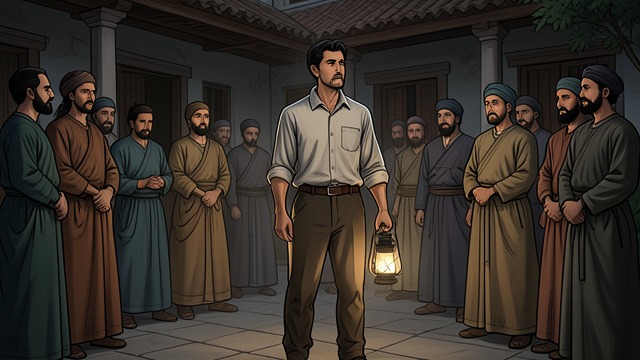
Returning to Bombay as his father dies, Saladin discovers that affection can survive old grievances. Their final days together allow him to receive the inheritance he once resisted: not only money and the disputed Solan property, but a more generous understanding of his father and himself.
A name turned toward life
After the funeral, Saladin accepts his birth name, Salahuddin, and reconnects with Zeenat Vakil. The change is not a simple rejection of his English years; it is a decision to stop treating the past as an enemy that must be erased before a future can begin.
The novel leaves him facing forward without pretending that history has disappeared. Home becomes something he can enter through renewed relationships, rather than a prize secured by perfect assimilation.
Saladin’s childhood in Bombay
Saladin’s years at school and early adult life in England
Saladin’s return to Bombay after fifteen years away
After Saladin’s transformation and escape to Brickhall
After Changez Chamchawala’s death
